
Therapy for Driving Anxiety
Virtual therapy for driving anxiety, fear of driving, panic, and driving-related OCD in Ontario and British Columbia.
You might know exactly what you're supposed to do when you're driving, but that doesn't mean it feels easy to do it.
Maybe you're approaching a left turn and suddenly feel overwhelmed by everything you need to pay attention to. Maybe you notice your heart racing on the highway and start wondering whether you'll be able to handle it. Or perhaps you finish a drive and find yourself replaying parts of it, wondering whether you missed something or made a mistake.
For some people, driving anxiety develops gradually. For others, it starts after a panic attack, an accident, or a period of not driving. You might be comfortable on familiar roads but avoid highways, struggle to drive alone, or feel as though you're constantly anticipating what could go wrong.
Sometimes, driving anxiety isn't about not knowing how to drive. It's about what happens when you start doubting your ability to do it.
And because driving does involve real responsibility, it's not as simple as telling yourself there's nothing to worry about.
There is a difference between taking driving seriously and feeling so anxious about it that it starts to limit your life. Therapy can help you work through the fears that are keeping you stuck and gradually move toward greater confidence and independence behind the wheel.
I offer virtual psychotherapy for driving anxiety, using an evidence-based, exposure-based approach tailored to your experiences and goals.
Driving anxiety is something you can get help with.
I offer virtual psychotherapy for driving anxiety, using an evidence-based, exposure-based approach tailored to your experiences and goals.
When driving becomes something you worry about
Driving anxiety can look different from person to person. You might be working toward your G2 or G licence, trying to get back behind the wheel after a long break, or finding that situations you used to manage comfortably now feel overwhelming.
You might recognize some of these experiences:
Avoiding highways, left turns, lane changes, busy intersections, or unfamiliar routes.
Feeling anxious about driving alone, particularly when you're far from home or somewhere you can't easily pull over.
Worrying about feeling dizzy, nauseated, faint, or panicky while driving.
Becoming preoccupied with the possibility of making a mistake, missing something important, or reacting too slowly.
Doubting your ability to concentrate, make decisions, or manage unexpected situations on the road.
Feeling more comfortable when someone else is in the car, but struggling when you have to drive independently.
Putting off getting your licence or relying on other people for transportation, even when you'd really like to drive yourself.
You might also notice how much mental energy driving takes up. You could spend time anticipating everything that might happen before leaving, monitoring how you feel while driving, or replaying the experience afterward to figure out whether you did anything wrong.
Over time, it's not just the drive itself that becomes difficult. It's the planning, anticipation, second-guessing, and relief afterward.
How does therapy for driving anxiety work?
I use an evidence-based, exposure-based approach to help you gradually approach the driving situations you've been avoiding and change how you respond to the anxiety surrounding them.
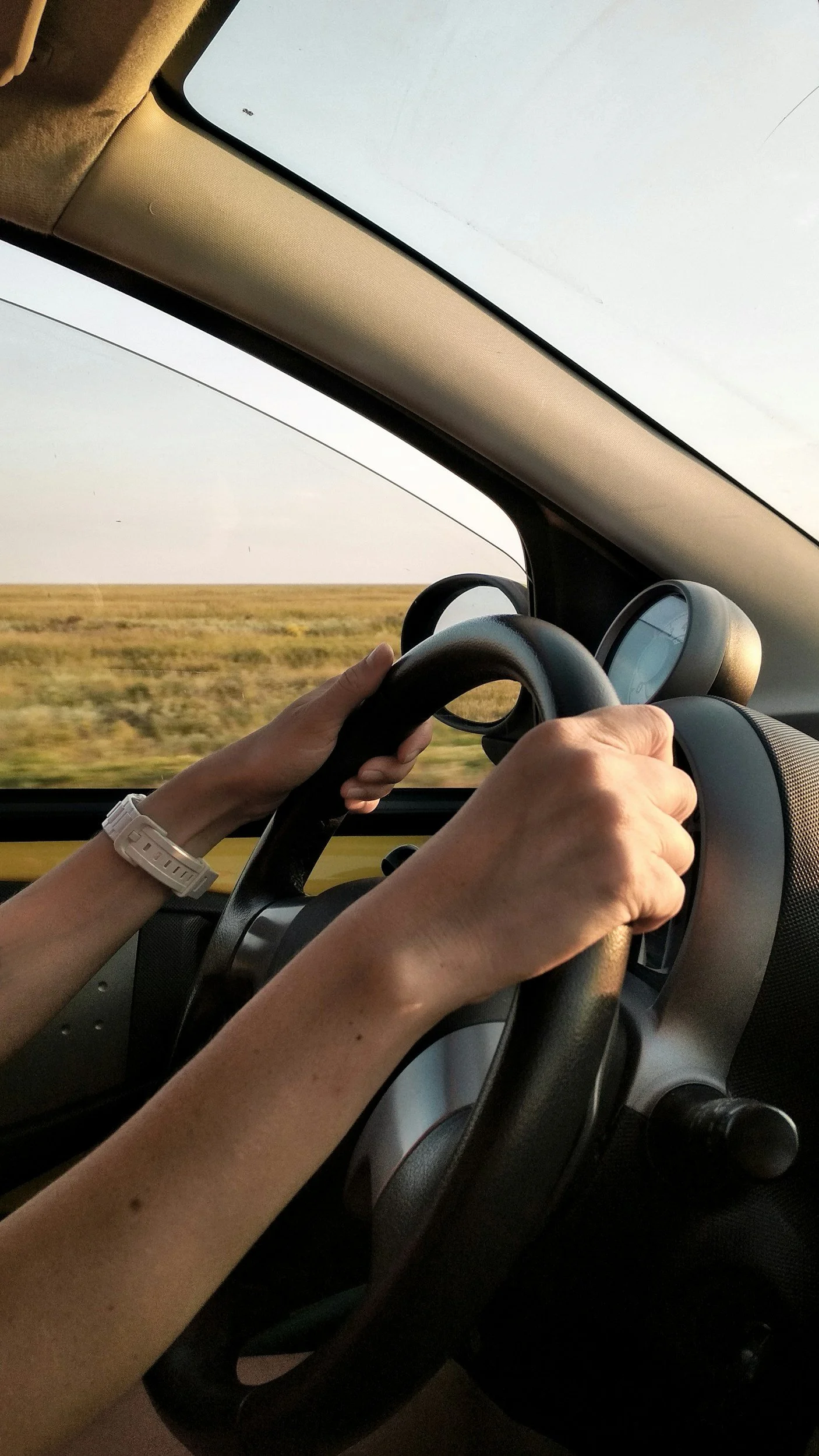
Exposure-based therapy is a well-established approach for treating anxiety and phobias. Rather than waiting until you feel completely confident, we work together to help you engage with feared situations in a gradual, intentional way.
The aim isn't to eliminate every anxious thought or physical sensation before you drive. It's to help you learn that anxiety and uncertainty can be manageable, and that you can move toward your goals without needing to feel completely certain or comfortable first.
Treatment is collaborative and tailored to your current driving experience, the situations you find difficult, and what you'd ultimately like to be able to do.
Starting where you are
If you've been avoiding driving altogether, we might begin with something that feels relatively manageable, such as sitting in the driver's seat or becoming comfortable being in the car again.
If you're already driving locally but avoiding highways, we might focus on the particular thoughts and fears that make highway driving difficult.
We don't need to start with your biggest fear or follow a rigid sequence. We'll identify a starting point together and build toward more challenging situations as you progress.
Working toward the situations you've been avoiding
Exposure exercises might involve gradually working toward:
Getting into the car and becoming comfortable with the experience again.
Driving short, familiar routes.
Extending the length or complexity of your usual drives.
Approaching left turns, lane changes, intersections, or parking.
Driving to unfamiliar destinations.
Working toward highway driving or driving alone.
These are examples rather than a prescribed sequence. Your plan will depend on your current driving skills, what you're avoiding, and the goals that matter to you.
We can also consider when and where you practise. For example, it might make sense to start on familiar roads at quieter times before gradually introducing more complex situations.
Exposure isn't about pushing yourself into something you're not equipped to manage. It's about finding opportunities to practise in a way that supports both appropriate driving safety and meaningful progress.
Learning to respond differently to anxiety
Getting more practice behind the wheel can be helpful, but practice alone doesn't always address what's keeping the anxiety going.
You might be driving while constantly monitoring your body, trying to anticipate every possible mistake, or mentally checking whether you're doing everything correctly. Even when the drive goes well, you may come away feeling that you were only safe because you were so vigilant.
In therapy, we'll look at these patterns and work on responding to anxiety differently. Depending on your concerns, this might involve reducing excessive checking, allowing uncertainty to be present without trying to resolve it, or learning to tolerate physical sensations without interpreting them as signs that you can't cope.
The goal is to help you develop a more flexible and sustainable relationship with driving, rather than feeling that you need to control every aspect of the experience to get through it.